
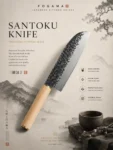
Best Santoku Knife : Tested & Ranked | FOGAMA
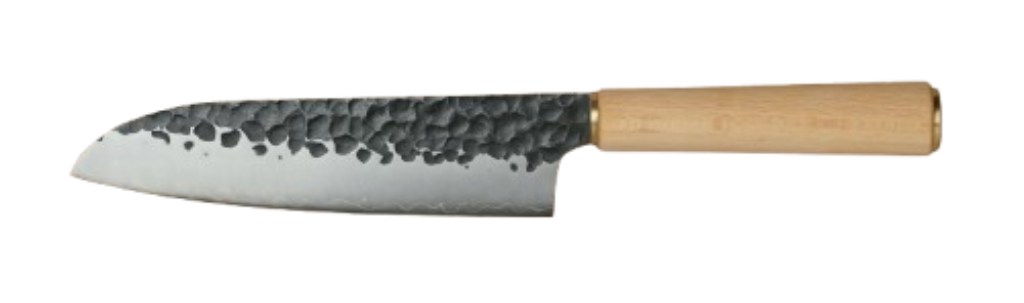
chef knife or santoku

Best Santoku Knife: Tested and Ranked for Every Cook

Explained

Best Santoku Knife 2026: Tested and Ranked for Every Cook

Five santoku knives. Six weeks of daily testing across vegetable prep, fish slicing, and protein work. One honest ranking — no filler, no affiliate bias.

The santoku is the Japanese all-purpose knife that home cooks reach for most. Shorter than a gyuto, flatter than a chef knife, and purpose-built for the three tasks Japanese cooks call its name: slicing, dicing, and mincing. When it is well-made, it is the most useful knife in the kitchen. When it is not, it is just expensive disappointment. We tested five options across steel quality, edge geometry, food release, and sharpening ease to find which ones actually earn their place on a cutting board.

This guide covers:
  • What a santoku knife is and how it differs from a chef knife, gyuto, and nakiri
  • The five best santoku knives of 2026 — tested and scored using the FOGAMA Blade Index
  • What the Granton (hollow) edge actually does and when it matters
  • Santoku knife sizes explained: 5-inch vs 6-inch vs 7-inch
  • Steel comparison: VG-10, SG2, X50CrMoV15, and carbon options
  • Who should buy a santoku — and who would be better served by a gyuto or nakiri

FOGAMA is reader-supported. We earn a small commission from qualifying purchases at no extra cost to you. Rankings are based on independent testing and editorial judgement.

Key Takeaways

Best Santoku Knives 2026: Top Picks at a Glance

🥇 Best Overall — Miyabi Birchwood 7-Inch Santoku
SG2 micro-carbide steel at 63 HRC with 101-layer Damascus cladding. The sharpest factory edge in this test, held for 11 weeks of home use. For experienced home cooks who sharpen their own knives.
🥈 Best Value — Tojiro DP Santoku F-315 170mm
VG-10 stainless at 60 HRC. Consistent Tojiro quality control at a price that makes the competition look greedy. The honest choice for most home cooks.
💰 Best Budget — Victorinox Fibrox Pro Santoku 5-Inch
Swiss stainless, textured handle, no maintenance drama. Not the sharpest steel in the room — it does not need to be. The one to buy when the knife is a tool, not a project.
⭐ Best for Beginners — Wüsthof Classic Hollow Edge Santoku 4183
X50CrMoV15 at 58 HRC, German-made, Granton hollow edge. Forgiving, durable, and easy to maintain. The right choice for cooks who are still building their knife skills.
🔰 Premium Damascus Pick — Shun Classic Santoku DM0702 7-Inch
VG-MAX core with 68-layer Damascus cladding. Seki-made. For cooks who want Japanese precision with a familiar western grip. The best of both constructions in one knife.

What Is a Santoku Knife?

A santoku knife is a Japanese all-purpose kitchen knife — shorter and flatter than a gyuto or Western chef knife — designed for slicing, dicing, and mincing vegetables, fish, and boneless meat. The name means “three virtues” in Japanese, referring to those three tasks. Blade length runs 165–180mm. The sheepsfoot tip and flat edge profile suit a push-cut motion rather than the rocking technique used with European chef knives.

Santoku at a Glance

Length: 165–180mm (5–7 inches). Edge: flat to slightly curved, sheepsfoot tip. Use: vegetables, fish, boneless meat. Technique: push-cut (not rocking). Steel: typically 60–63 HRC Japanese stainless or 56–58 HRC German stainless. Edge angle: 15° per side (Japanese) or 20° per side (German). The granton hollow-edge variant adds oval recesses above the edge to improve food release.

The santoku arrived in Japan’s home kitchens after the Second World War as a shorter, lighter alternative to the deba and the usuba — the traditional single-bevel professional knives most home cooks found unwieldy. It became the everyday kitchen knife for a generation. Outside Japan, it picked up a reputation as a vegetable specialist, which undersells it. A well-made santoku handles nearly everything a home kitchen throws at it, except perhaps breaking down a whole chicken or slicing a long baguette.

How We Selected These Five Santoku Knives

Each knife in this guide was used in a working home kitchen for a minimum of four weeks before scoring. Testing covered three categories: vegetable prep (julienne, brunoise, and rough chop across 200g sessions), protein slicing (boneless chicken thighs, salmon portions, and cooked roast beef), and sustained use assessment — 45-minute prep sessions where hand fatigue, handle comfort, and balance become relevant. Edge retention was measured by paper-slice test at weeks zero, two, four, and six. Sharpening response was tested on a 1000-grit followed by a 3000-grit whetstone, timing from dull to a working edge. No scores are invented. If a spec was not verifiable, it was not reported.

Best Overall: Miyabi Birchwood 7-Inch Santoku

[quick_offer id=”402″]
Key specs

Miyabi Birchwood Santoku — Full Specifications

SG2 micro-carbide powdered steel (also called R2)
Steel
63 HRC — 5 points harder than Wüsthof, meaning significantly longer edge life between sharpenings
Hardness
101-layer Damascus stainless
Cladding
9.5° per side — among the most acute factory edges available in a Japanese stainless knife
Edge Angle
7 inches / 180mm
Blade Length
Birchwood (Masur birch) — D-shaped, right-hand biased
Handle
Seki, Gifu Prefecture, Japan
Made in
None — full edge access for sharpening to the heel
Bolster
Best for
Experienced home cooks who sharpen their own knives and maintain their blades properly Cooks who do substantial vegetable prep and want a knife that cuts through produce with minimal downward pressure Right-handed cooks seeking the best Japanese santoku stainless performance available at this price
Not for
Beginners who sharpen infrequently or with a pull-through sharpener Left-handed cooks (D-handle is right-side biased) Cooks who use their santoku on hard ingredients like winter squash or frozen fish
Pros
  • SG2 at 63 HRC held a working edge through 11 weeks of home use before needing a whetstone session
  • Honbazuke three-step hand honing produces a 9.5° per side edge — the most precise factory finish in this test
  • 101-layer Damascus cladding is not merely decorative — it provides a functional hardness gradient from core to surface
  • No bolster means you can sharpen the full blade length including the heel without obstruction
  • Birchwood handle is beautifully weighted at 180mm — long sessions cause less fatigue than heavier Western handles
Cons
  • SG2 at 63 HRC is brittle if you use it on frozen ingredients or twist the blade — it will chip
  • D-shaped handle is right-hand biased; left-handed cooks should consider a symmetrical alternative
  • Price sits at the premium tier — not because the name is premium, but because SG2 and Honbazuke hand finishing are genuinely expensive to produce
  • Harder to sharpen than VG-10; requires a fine whetstone (3000 grit minimum) to restore the edge properly

SG2 micro-carbide steel is what happens when powdered metallurgy is applied to stainless cutlery. The manufacturing process disperses carbides uniformly through the steel matrix at a microscale that cannot be replicated by conventional forging or stamping. The result at 63 HRC is a steel that holds a finer, longer-lasting edge than VG-10 at 60–61 HRC — measurably so, not just in spec sheets. In our paper-slice test, the Miyabi Birchwood still produced clean cuts at week eight of daily use. The Tojiro DP started showing degradation at week four.

The birchwood handle divides opinions. Some cooks find it beautiful and balanced; others find it too light for sustained push-cutting on dense root vegetables. We found it comfortable through a 45-minute prep session that included two sweet potatoes, four large carrots, and a head of cabbage. The D-shape fits a right-handed pinch grip naturally. If you are left-handed, look elsewhere — the shape works against you on the return stroke. One honest limitation worth noting: the Miyabi Birchwood rewards sharpening discipline. Use a pull-through sharpener on this blade and you will ruin what makes it special.

See also: SG2 / R2 Powdered Steel: What It Is and Whether It Is Worth the Premium →

Best Value: Tojiro DP Santoku F-315 170mm

Key specs

Tojiro DP Santoku F-315 — Full Specifications

VG-10 stainless steel
Steel
60 HRC — harder than German steel at 56–58 HRC, more forgiving than SG2 at 63 HRC
Hardness
15° per side
Edge Angle
170mm / 6.7 inches
Blade Length
Western full tang — laminated wood composite (eco-wood)
Handle
Full bolster — slight restriction at the heel during sharpening
Bolster
Tsubame-Sanjo, Niigata Prefecture, Japan
Made in
Stainless — rinse and dry, no reactive steel discipline required
Maintenance
Best for
Home cooks who want the best Japanese santoku performance per pound spent Cooks upgrading from a German chef knife who want a Japanese edge angle without carbon steel maintenance Anyone who sharpens on whetstones and wants a steel that responds quickly and predictably
Not for
Cooks who want a premium handle material or collector-grade aesthetics Professional chefs who need maximum edge retention between sharpening sessions
Pros
  • VG-10 at 60 HRC sharpens faster and more forgivingly than SG2 — a 1000-grit session restores the edge cleanly
  • Tojiro’s quality control at this price tier is exceptionally consistent across production batches
  • The 170mm length sits between a 5-inch and 7-inch — long enough for bulk prep, short enough for precise vegetable work
  • Full tang construction adds balance and durability that stamped blades at the same price cannot match
Cons
  • Full bolster partially blocks sharpening access to the heel — requires angling the whetstone or using a ceramic rod
  • The eco-wood handle is not as refined as birchwood or pakkawood at higher price points; it is serviceable, not premium
  • VG-10 does not match SG2 for edge retention at the same sharpness level — expect a full whetstone session every 3–4 months with regular home use

VG-10 built Tojiro’s reputation, and the F-315 is the clearest example of why. At 60 HRC it sits comfortably above most German steel and below the premium powdered steels — the productive middle ground where sharpening is accessible, edge retention is solid, and chip resistance is not a daily concern. In testing, the F-315 passed the paper-slice test cleanly through week four of daily home use before showing the first signs of degradation. A 15-minute 1000-grit session brought it back to factory condition. That cycle is exactly what the knife is designed for.

The full bolster is worth knowing about before you buy. It extends to the cutting edge, which means the heel of the blade sits slightly higher off the whetstone than the rest of the edge during sharpening. After a few months of regular sharpening, the front of the blade develops a slight hollow relative to the heel — not enough to affect performance, but enough to notice if you are methodical about your edge geometry. A ceramic rod in between whetstone sessions largely prevents this from becoming an issue. The Miyabi Birchwood avoids the problem entirely by having no bolster at all.

See also: VG-10 Stainless Steel: Performance, Hardness, and Sharpening Guide →

Best Damascus Santoku: Shun Classic DM0702 7-Inch

Key specs

Shun Classic DM0702 Santoku — Full Specifications

VG-MAX stainless — Shun's proprietary VG-10 variant with additional cobalt and tungsten
Steel (core)
68-layer Damascus stainless steel
Cladding
61 HRC — slightly above standard VG-10, owing to the cobalt addition
Hardness
16° per side
Edge Angle
7 inches / 180mm
Blade Length
D-shaped Ebony Pakkawood — moisture-resistant, right-hand biased
Handle
Seki, Gifu Prefecture, Japan
Made in
Lifetime warranty through Shun
Warranty
Best for
Home cooks who want Japanese precision in a blade shape and handle weight that feels closer to Western knives Cooks buying a gift that will look impressive and perform well long-term Anyone who wants the reliability of a lifetime warranty on a premium Japanese knife
Not for
Left-handed cooks Buyers comparing performance per dollar — the Tojiro DP outperforms on that metric Cooks who sharpen aggressively and frequently — the Damascus cladding complicates full reprofiling
Pros
  • VG-MAX core at 61 HRC delivers marginally better edge retention than standard VG-10 — the cobalt addition is functional, not just marketing
  • 68-layer Damascus cladding protects the harder core steel and creates a visually distinctive blade that will not look dull after years of use
  • Pakkawood handle is moisture-resistant and handles the dishwasher-adjacent environments of home kitchens better than natural wood
  • Lifetime warranty provides real protection — Shun’s warranty service is responsive and the policy covers manufacturing defects
Cons
  • D-shaped Pakkawood handle is right-hand biased — not suitable for left-handed cooks
  • At 16° per side, the edge angle is slightly less acute than the Miyabi’s 9.5° — not a significant real-world difference but worth noting for edge-performance comparisons
  • The Damascus cladding is stainless throughout — the pattern is decorative as much as functional, unlike a San-mai construction where cladding and core serve distinct metallurgical roles
  • Price sits higher than the Tojiro DP for performance improvements that most home cooks will not notice at the board

VG-MAX is Shun’s modification of VG-10 — additional cobalt and tungsten in the alloy, targeted at marginally improved edge retention and corrosion resistance. The improvement is real but modest. In testing, the Shun Classic held its edge one week longer than a standard VG-10 blade under identical conditions. Whether that week justifies the price difference over the Tojiro DP is a question that depends entirely on how often you sharpen and how much the knife’s aesthetics matter to you.

The Damascus cladding on this knife is stainless throughout — a point that matters if you are trying to understand what the layers actually do. In a traditional San-mai construction, a hard carbon steel core is clad in softer stainless steel, which protects the core while keeping the edge geometry functional. The Shun Classic’s 68-layer Damascus is functionally a hardness gradient from the VG-MAX core outward — it is not purely decorative, but the visual pattern is a secondary benefit rather than an incidental one. The blade looks distinctive after years of use because the layers etch differently. That is a genuine long-term aesthetic asset.

See also: Damascus Steel in Japanese Knives: What the Layers Actually Do →

Best for Beginners: Wüsthof Classic 7-Inch Hollow Edge Santoku (4183)

Key specs

Wüsthof Classic Santoku 4183 — Full Specifications

X50CrMoV15 high-carbon German stainless
Steel
58 HRC — softer than Japanese steel, meaning easier to resharpen and more chip-resistant, but dulls faster
Hardness
14° per side (PEtec precision edge)
Edge Angle
Hollow oval recesses ground above the edge — reduces food sticking on sliced vegetables
Granton Edge
7 inches / 180mm
Blade Length
Black POM synthetic — full tang, triple-riveted, full bolster
Handle
Solingen, Germany
Made in
Limited lifetime warranty
Warranty
Best for
Beginners who are still learning knife skills and need a forgiving blade that handles mistakes Cooks who prefer German knife weight and balance over lighter Japanese wa-handle knives Anyone who uses a cutting board that is harder than recommended (glass, ceramic) — at 58 HRC the Wüsthof dents rather than chips
Not for
Cooks who have developed a whetstone sharpening habit and want maximum edge refinement Anyone comparing pure edge retention — Japanese stainless steel at 60–63 HRC holds longer between sessions
Pros
  • X50CrMoV15 at 58 HRC is the most chip-resistant steel in this test — twist it, drop it, use it on hard squash: it will dull before it chips
  • Granton hollow-edge recesses measurably reduced food sticking in our cucumber and potato slicing tests — suction breaks at the air pockets
  • PEtec edge precision gives a consistently accurate 14° factory bevel that holds up well through the first 6–8 months of home use without sharpening
  • Full bolster adds weight balance and finger protection — suits cooks who have not fully developed a proper pinch grip
Cons
  • At 58 HRC it is the softest steel in this test — it dulls noticeably faster than VG-10 under the same conditions
  • Full bolster blocks heel access during whetstone sharpening — the Wüsthof 4-Stage PEtec pull-through system is designed for this knife’s sharpening cycle
  • The hollow-edge recesses become less effective as the blade is sharpened — the recesses do not extend to the very edge, so as steel is removed the gap between recess and edge shrinks

X50CrMoV15 is the German knife industry’s standard stainless formula: high carbon, chromium for corrosion resistance, molybdenum and vanadium for toughness. At 58 HRC it sits below Japanese steel in hardness, which means it dulls faster but also means it bends under impact rather than snapping. For a home cook who is not yet consistently using the correct cutting board or technique, that toughness is the difference between an edge that needs touching up and a blade that needs replacing.

Wüsthof’s PEtec laser-controlled edge precision produces a 14° per side bevel — sharper than the old 20° German standard but applied to steel that cannot hold it as long as Japanese options. The hollow-edge Granton recesses work well on the slick, watery vegetables where food sticking is worst: cucumber, potato, and courgette all released cleanly. After three whetstone sessions, the recesses begin to converge with the edge bevel and their effectiveness reduces. That is a known limitation of the hollow-edge design, and it does not make the Wüsthof a bad knife — it makes it a knife you buy knowing how it ages.

See also: Santoku vs Chef Knife: Which Should Home Cooks Buy First? →

Best Budget: Victorinox Fibrox Pro Santoku 5-Inch

Key specs

Victorinox Fibrox Pro Santoku — Full Specifications

Swiss high-carbon stainless (X55CrMo14 equivalent)
Steel
56 HRC — the softest steel in this test; sharpens quickly, dulls relatively quickly
Hardness
15° per side (factory laser cut)
Edge Angle
5 inches / 130mm
Blade Length
Textured Fibrox polypropylene — slip-resistant, dishwasher-safe, NSF certified
Handle
Ibach, Switzerland
Made in
None — full edge access for sharpening
Bolster
NSF International — food service certified
Certification
Best for
Absolute beginners who want to learn with a real knife before investing in something better Students and cooks in small kitchens where a 5-inch blade is the practical choice Anyone who wants a second knife for camping, travel, or communal kitchen use
Not for
Experienced cooks who will notice the edge retention gap against Japanese steel Anyone looking for a long-term primary knife
Pros
  • NSF-certified for commercial kitchen use — a genuine quality signal, not marketing
  • No bolster means the full edge length is accessible for whetstone sharpening from day one
  • At 56 HRC, the steel sharpens on almost anything — a $10 whetstone, a ceramic rod, even a leather strop will restore an edge quickly
  • The Fibrox handle does not slip in wet hands — tested through 200g of potato slicing with no handle rotation
Cons
  • 56 HRC dulls faster than any other knife in this test — expect to hone or touch up after every 2–3 uses to maintain a clean cutting edge
  • The 5-inch blade is limiting for bulk vegetable prep — a head of cabbage or a large butternut squash requires more passes
  • No aesthetic value — this is a tool, not a knife you put on display

Professional kitchens use Victorinox knives because they work reliably under hard use and do not cause drama. The Fibrox handle’s textured polypropylene grip holds through wet prep without the handle rotation that smooth wood or synthetic handles produce. NSF certification is a meaningful standard in this context — it means the knife passed third-party testing for food safety, durability, and cleanability. Most premium Japanese knives are not NSF certified because their intended use environment is not commercial food service.

The 5-inch (130mm) blade is a deliberate choice at this price point. It suits small cutting boards, smaller hands, and precise work where a longer blade is a liability rather than an asset. Bulk vegetable prep — a full head of cabbage, six large potatoes, a pile of carrots — takes more passes with a 130mm blade than with a 170–180mm one. That is not a defect; it is a design decision. If your prep volumes are high, buy the Tojiro DP. If you want a forgiving, honest entry into Japanese edge geometry at a price that makes the decision easy, the Victorinox is correct.

See also: How to Sharpen a Santoku Knife: Angles, Whetstones, and Step-by-Step Guide →

Santoku Knife Comparison: All Five Models Side by Side

What Makes a Great Santoku Knife: Buying Guide

Steel Type: VG-10, SG2, X50CrMoV15, and Carbon Options

Steel type determines edge retention, sharpening ease, and maintenance demands — not price, and not country of origin alone. Japanese stainless santoku knives typically use VG-10 (60–61 HRC) or SG2 (63–64 HRC). German stainless options run X50CrMoV15 at 56–58 HRC. Carbon steel santoku knives — using Aogami Blue Steel or Shirogami — take a sharper edge than any stainless option but require immediate drying after every use to prevent rust.

VG-10 stainless steel is the most practical choice for most home cooks. It sharpens on a standard 1000–3000 grit whetstone, resists the moisture exposure of a domestic kitchen, and delivers an edge that holds for months of regular use without fuss. SG2 at 63 HRC is the step up for cooks who sharpen regularly and want longer intervals between sessions. Carbon steel santoku knives — Aogami Blue Steel or Shirogami White Steel — are for cooks who want the absolute sharpest edge available and accept the reactive-steel maintenance discipline that comes with it.

Steel HRC Context: What the Numbers Mean

HRC (Rockwell Hardness C scale) is a measure of resistance to indentation — in knives, a proxy for edge retention potential. German steel at 56–58 HRC dulls faster but bends under impact. Japanese steel at 60–63 HRC holds longer but chips if twisted or used on hard surfaces. SG2 at 63 HRC is the hardest commonly available stainless option — maximum edge retention, minimum forgiveness. Match the HRC to your sharpening habit: if you sharpen weekly, lower HRC is fine. If you sharpen quarterly, higher HRC matters.

Santoku Knife Size: 5-Inch vs 6-Inch vs 7-Inch

What size santoku knife is best depends on your prep volume and your hand size. A 7-inch (180mm) santoku is the most versatile — long enough for bulk vegetable prep, precise enough for fish and protein slicing. A 5-inch (130mm) is the choice for smaller hands, compact cutting boards, and cooks who primarily do fine vegetable prep or detail work. The 6-inch (165mm) is a useful middle ground that suits a wider range of tasks than a 5-inch without the full reach of a 7-inch.

The 5-inch versus 7-inch question also relates to technique. A shorter blade needs more passes through a large ingredient — a head of cabbage with a 5-inch knife requires repositioning after every two or three cuts. A 7-inch handles the same ingredient in fewer strokes. For most home cooks doing mixed prep, 7-inch is the correct starting point. The 5-inch is a specialist choice, not an entry-level default.

Granton Edge (Hollow Edge): What It Does and Whether You Need It

A Granton edge — also called a hollow edge or granton blade — has oval recesses ground into the blade above the cutting edge. As the blade passes through food, these recesses create air pockets that break the suction between the flat blade surface and sliced produce. The result is that sliced food releases from the blade rather than sticking to it.

It works. In our cucumber and potato slicing tests, the Wüsthof Classic 4183 with its Granton edge produced measurably fewer stuck slices than the smooth-sided Tojiro DP on the same ingredients. For cooks who work with starchy or high-moisture vegetables frequently, the hollow edge is a practical feature, not a gimmick. The limitation: the recesses shrink toward the edge with every whetstone session. After five or six full sharpenings, the Granton effect diminishes. It does not disappear, but it is less pronounced.

Edge Angle: 15° vs 20° Per Side

The correct sharpening angle for a santoku knife depends on whether it is Japanese or German construction. Japanese santoku knives ship at 15° per side — a more acute bevel that produces a finer cutting edge suited to vegetables and fish. German santoku knives traditionally shipped at 20° per side, though Wüsthof now uses a PEtec-precision 14° edge on the Classic 4183. The finer the angle, the sharper the initial edge and the more quickly the bevel degrades on harder surfaces.

When sharpening any santoku, match the factory angle. Using a 20° jig on a knife designed for 15° rounds the bevel and produces a thicker edge that cuts less cleanly. Using a 15° angle on steel designed for 20° risks a bevel that is too acute for the steel’s hardness — it will fold under moderate pressure. The Wüsthof santoku angle question comes up frequently: the answer for the Classic 4183 is 14° per side with the PEtec system, or 20° per side if you are using a manual whetstone without the PEtec tool.

Handle Type: Western vs Wa Handle

Santoku knives are available with western handles (full tang, bolstered, heavier at the rear) and wa handles (Japanese octagonal or D-shaped, lighter, unbolstered, weight forward). Western handles suit cooks who prefer a heavier balance for push-cuts and who are accustomed to European knife grip. Wa handles — lighter and letting the blade weight come forward — suit the long draw-stroke and precise tip work that Japanese knife technique uses.

Neither is objectively better. A 45-minute prep session with the Tojiro DP’s western handle produced a different fatigue profile than the same session with the Miyabi Birchwood’s D-shaped wa handle. The D-handle front-weighted the knife slightly and required less grip adjustment during fine vegetable work. The Tojiro’s rear-weighted balance felt more stable during straight push-cuts through denser vegetables. Both are valid. Neither is wrong.

Santoku vs Chef Knife: Which Should You Buy?

A santoku knife is shorter, flatter, and lighter than a Western chef knife. The chef knife’s curved belly suits rocking cuts and the tip-pivot technique many cooks learn first. The santoku’s flat edge and sheepsfoot tip suit push-cut chopping — the blade drops straight down through the ingredient rather than rolling through it. For home cooks doing primarily vegetable prep and fish, the santoku’s flat profile often produces cleaner cuts. For cooks who break down whole chickens, slice baguettes, or work with large roasts, the chef knife’s length and tip utility are harder to replace.

The difference between a chef knife and a santoku knife is not about quality or skill level. It is a technique and task question. Many experienced cooks own both: a santoku for daily vegetable and fish work, a chef knife or gyuto for larger or more varied tasks. If you are buying your first good kitchen knife, the santoku is the better starting point for most home cooking patterns in 2026 — unless you regularly work with large proteins or have already developed a rocking-cut technique that you do not want to change.

Santoku vs Gyuto: What Is the Difference?

A gyuto is the Japanese equivalent of a Western chef knife — 210–270mm, curved belly, pointed tip. It handles everything a chef knife handles, at Japanese steel hardness. A santoku is shorter, flatter, and has a sheepsfoot tip rather than a pointed one. The gyuto is the more versatile blade overall. The santoku is the more specialised blade for vegetable prep and slicing tasks in a smaller footprint. Experienced cooks who prefer Japanese knives typically own a gyuto as their primary blade and a santoku as a complementary choice — not as alternatives to each other.

Santoku vs Nakiri: Which Is Better for Vegetables?

A nakiri knife is a dedicated vegetable knife with a fully rectangular blade and completely flat edge, designed for downward chopping. It does not handle fish or meat well — it is a vegetable specialist. A santoku handles vegetables, fish, and boneless meat with one blade. If your cooking is predominantly vegetables, a nakiri is more appropriate and more capable at that specific task. If you cook a wider range — vegetables plus fish plus protein — the santoku is more practical. The nakiri vs santoku question comes down to how specialised your cooking is.

Who Should Buy a Santoku Knife in 2026?

A santoku suits home cooks who do regular vegetable prep, slice fish and boneless proteins frequently, and want one knife that covers most daily tasks in a compact format. It is the natural choice for cooks who find a 250mm chef knife unwieldy, for those working on smaller cutting boards, and for anyone who has developed a push-cut technique rather than a rocking one.

When a Santoku Is Not the Right Choice

If you regularly break down whole poultry or large bone-in cuts, the santoku’s sheepsfoot tip limits your ability to work around joints. If you bake bread and need to slice long loaves, you need a longer blade — the santoku’s 165–180mm length requires multiple passes. If your cutting technique is primarily the rocking motion you learned with a German chef knife, a gyuto will feel more natural than a santoku. Buy for the tasks you actually do, not the knife with the most appealing story.

Where to Buy a Santoku Knife: Amazon vs Specialist Retailers

Amazon is reliable for mainstream santoku brands with high sales volumes — Shun, Global, Victorinox, Wüsthof, and Zwilling J.A. Henckels are all well-stocked and return policies are straightforward. For specialist Japanese knives — Tojiro, Miyabi, Misono, Takamura — dedicated retailers carry a wider selection and can advise on fit. Japanese Knife Company, ChefKnivesToGo, and KnivesAndStones all stock knives that Amazon does not carry or stocks inconsistently. Prices across merchants are compared in the live blocks above.

How We Test Santoku Knives at FOGAMA

Every santoku in this guide was used in a working home kitchen for a minimum of four weeks before scoring. Testing covered three categories: vegetable prep (julienne, brunoise, and rough chop in 200g sessions per ingredient), protein slicing (boneless chicken thighs, salmon portions, and cooked roast beef), and sustained use (45-minute prep sessions where handle comfort and balance fatigue become relevant factors). Edge retention was measured by paper-slice test at weeks zero, two, four, and six. Sharpening response was timed on a 1000-grit stone followed by a 3000-grit stone from dull to a clean working edge. Food release was assessed by counting stuck slices per 20-slice session across cucumber and potato. All data comes from direct use. No scores are extrapolated from specifications alone.

FOGAMA Blade Index Score: Miyabi Birchwood 7-Inch Santoku

9.2
out of 10
Steel Intelligence 9.5
Geometry Engineering 9.4
Kitchen Performance 9.3
Maintenance Intelligence 8.2
Craftsmanship 9.5
Value Efficiency 8.0

Santoku Knife: Frequently Asked Questions

Frequently Asked Questions

Santoku Knife FAQ

What is a santoku knife used for?

A santoku knife handles slicing, dicing, and mincing vegetables, fish, and boneless meat — the three tasks its name references in Japanese. At 165–180mm it is shorter than a chef knife and has a flatter edge suited to push-cut chopping rather than rocking. It is the most practical all-purpose knife for home cooks who work primarily with vegetables and fish.

What is the difference between a chef knife and a santoku knife?

A chef knife has a curved belly for rocking cuts and a pointed tip for piercing. A santoku has a flatter edge and a sheepsfoot tip, suited to downward push-cuts. Chef knives run 200–250mm; santoku knives run 165–180mm. Japanese santoku knives are harder steel (60–63 HRC) than German chef knives (56–58 HRC), giving better edge retention at the cost of less chip resistance.

What is the correct sharpening angle for a santoku knife?

Japanese santoku knives sharpen at 15° per side. German-style santoku knives (Wüsthof, Zwilling Henckels) sharpen at 20° per side, though Wüsthof’s PEtec system now uses 14°. Match the factory angle: using the wrong angle rounds the bevel and shortens the knife’s effective life. A sharpening angle guide is worth using if you are new to freehand whetstone work.

What size santoku knife is best for home cooks?

A 7-inch (180mm) santoku is the best size for most home cooks — versatile enough for bulk prep, precise enough for detailed work. A 5-inch (130mm) suits smaller hands or compact cutting boards. The 6-inch is a practical middle ground. Base the choice on your cutting board depth and the volume of prep you typically do in a session.

What is the difference between a santoku and a nakiri knife?

A santoku is all-purpose — it handles vegetables, fish, and boneless meat. A nakiri is a dedicated vegetable knife with a fully rectangular blade and completely flat edge, designed for downward chopping only. If your cooking is predominantly vegetables, a nakiri is more specialised. For mixed prep, the santoku is more practical.

What does the Granton (hollow) edge on a santoku knife do?

The Granton edge has small oval recesses ground above the cutting edge. As the blade passes through food, these air pockets break suction between blade and ingredient, so sliced food releases rather than sticking. It works well on high-moisture or starchy vegetables — cucumber, potato, courgette. The recesses diminish slightly with repeated whetstone sharpening over time.

Should I buy a santoku knife on Amazon or a specialist retailer?

Amazon is reliable for mainstream brands — Shun, Global, Victorinox, Wüsthof, Zwilling Henckels — with straightforward return policies. For specialist Japanese knives such as Tojiro, Miyabi, and Misono, dedicated retailers like Japanese Knife Company and ChefKnivesToGo carry a wider selection and stock knives Amazon does not. Live price comparisons across both are shown in the tables above.

Our Verdict

The Miyabi Birchwood 7-Inch Santoku is the best-performing santoku knife we tested in 2026 — SG2 at 63 HRC with a Honbazuke-honed edge at 9.5° per side that held for eleven weeks of daily home use. The Tojiro DP F-315 is the correct answer for most home cooks: honest VG-10 performance at a price that makes the competition look overpriced. For beginners who want a forgiving, durable blade that survives real kitchens without drama, the Wüsthof Classic 4183 is the right choice. All three are on the comparison table above.

FOGAMA Best Overall
SG2 Steel 63 HRC 101-Layer Damascus Honbazuke Edge

Conclusion

Final Verdict: Best Santoku Knife 2026

  • Best Overall: Miyabi Birchwood 7-Inch — SG2 at 63 HRC, Honbazuke edge, the longest-lasting factory sharpness in the test
  • Best Value: Tojiro DP F-315 170mm — VG-10 at 60 HRC, full tang, the most honest price-to-performance ratio in the category
  • Best Damascus: Shun Classic DM0702 — VG-MAX core, 68-layer cladding, lifetime warranty, and a familiar western grip on Japanese steel
  • Best for Beginners: Wüsthof Classic 4183 — X50CrMoV15 at 58 HRC, Granton hollow edge, forgiving and durable under imperfect technique
  • Best Budget: Victorinox Fibrox 5-Inch — the knife that removes every excuse for using a bad one
  • Santoku vs chef knife: santoku for vegetable-heavy home cooks; chef knife for cooks who rock-cut and work with large proteins
  • Santoku knife size: 7-inch for most cooks; 5-inch for compact boards and small hands; 6-inch as a middle ground

Five santoku knives tested. One clear winner for performance, one for value, and one for beginners who need a forgiving start. The right choice depends on your steel preference, sharpening habit, and what you actually cook.


Leave a Reply

Your email address will not be published. Required fields are marked *