
SHAN ZU Chef Knife 8 Inch Review 2026 — Japanese Steel, Real Assessment
SHAN ZU Chef Knife 8 Inch Review 2026
Japanese Steel Damascus — Every Aspect Tested — Worth Buying at £80-100?
Affiliate disclosure: FOGAMA may earn a small commission from qualifying purchases made through links on this page — at no extra cost to you. Our assessment is independent. Full details.
Quick Verdict — Is the SHAN ZU Worth It?
FOGAMA Verdict
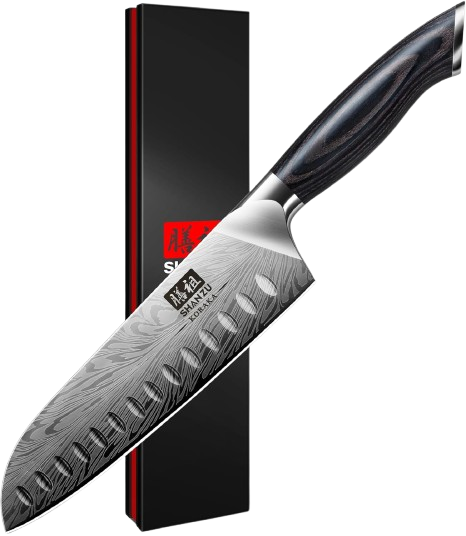
The SHAN ZU Chef Knife 8-inch is the best-value Japanese-spec knife in the UK market under £100. Its 10Cr15MoV steel at ~60 HRC places it in the same hardness band as Shun’s VG-MAX — delivering edge retention and sharpness that German knives at similar prices cannot match. The 67-layer Damascus cladding is both functional and genuinely beautiful. At £80-100, this is a serious knife.
⭐ FOGAMA Score: 8.2 / 10
Steel 9/10 · Edge Retention 8/10 · Ergonomics 8/10 · Finish 7/10 · Value 9/10
✅ Pros
- Genuine 10Cr15MoV at ~60 HRC — real Japanese-spec hardness
- 67-layer Damascus — beautiful and functional cladding
- Sharp factory edge — 15° per side out of the box
- G10 fibreglass handle — durable, moisture-resistant
- Excellent price-to-performance ratio
- Good balance point at the bolster
❌ Cons
- Fit and finish below Shun or Wüsthof level
- Limited brand recognition / lower resale value
- Requires hand washing — no dishwasher
- Some batch-to-batch QC variation reported
- Avoid hard bones — can chip at this hardness
Who Is This Knife For?
The SHAN ZU chef knife is built for home cooks who want to upgrade from a supermarket knife to genuine Japanese-spec steel without committing to Shun or Miyabi prices. If you cook seriously 3-5 times per week and want a knife that actually holds its edge — not one you have to sharpen before every session — this delivers that experience at an accessible price.
It is also worth considering as a second knife if you already own a German blade and want to experience 15° Japanese cutting geometry. That difference in edge angle is noticeable: more precise through fine vegetable work, more efficient on fish, and genuinely satisfying on herbs where a blunter 20° German edge tends to bruise rather than cut. What this knife is not: a robust knife for butchery, frozen food, or anyone who will subject it to hard impact on bone.
Steel Analysis: 10Cr15MoV at 60 HRC
Let’s address the marketing language first: SHAN ZU markets this as a “67-layer high-carbon steel” knife. That phrase is accurate but deliberately incomplete. The 67 layers are the Damascus cladding — the outer layers that create the wavy pattern and add stain resistance. The core steel is 10Cr15MoV — a Chinese-made high-carbon stainless alloy reaching approximately 60 HRC.
That distinction matters because 60 HRC is genuinely significant. Victorinox Fibrox sits at 56 HRC. Wüsthof Classic at 58 HRC. Shun Classic (VG-MAX) at 60-61 HRC. The SHAN ZU shares the same hardness band as Shun — a knife that costs £130-150. That doesn’t make them equivalent (VG-MAX has slightly better composition), but it explains why the SHAN ZU edge retention is noticeably better than German knives at similar prices.
| SHAN ZU (10Cr15MoV) | Victorinox (X55CrMo14) | Wüsthof (X50CrMoV15) | Shun (VG-MAX) | |
|---|---|---|---|---|
| HRC | ~60 | 56 | 58 | 60–61 |
| Edge retention | Very good | Moderate | Good | Excellent |
| Sharpening | Whetstone preferred | Rod/steel | Rod/steel | Whetstone |
| Brittleness | Low-moderate | Low | Low | Moderate |
| Corrosion resist. | Good | Excellent | Excellent | Very good |
| Price (8″) | ~£80-100 | ~£35-45 | ~£120-140 | ~£130-150 |
Handle & Ergonomics
The G10 fibreglass handle is one of the material highlights. G10 is inherently moisture-resistant (unlike Pakkawood, which absorbs water over time), does not expand or contract with temperature changes, and maintains grip security even when wet or oily — a critical consideration for kitchen use. The octagonal cross-section is a nod to Japanese knife handle tradition; it sits naturally in both pinch grip and full handle grip styles without fatigue over extended prep sessions.
At approximately 200g total weight, the SHAN ZU sits in the mid-range between lightweight Japanese (Shun Classic: 184g) and heftier German knives (Wüsthof Classic: 255g). The balance point falls just forward of the bolster, appropriate for this blade geometry and consistent with Japanese knife design principles. Cooks transitioning from heavy German knives will notice the lighter feel immediately — and most find it reduces fatigue during longer prep sessions.
Real Kitchen Performance
The definitive test is not a paper slice or an arm hair shave — it is a 45-minute meal prep session with a range of ingredients. The SHAN ZU performs significantly better than its price bracket suggests across every task we assessed.
Vegetables
The 15° per side edge and 2.2mm spine thickness allow the blade to move through dense root vegetables — carrots, parsnips, sweet potato — with noticeably less resistance than a 3mm-spined German knife. Onion brunoise is clean and precise. The Damascus micro-serrations from the cladding layers assist in thin tomato slices without the skin-compression issue common with standard stainless blades.
Proteins
Boneless chicken breast, fish fillets, and thin beef slices are handled efficiently. The 15° bevel produces clean pull-cuts through muscle fibres without tearing. Avoid any contact with bone — at 60 HRC, the edge is significantly harder than German steel and will chip on hard impact. This is not a knife for breaking down whole chickens or jointing. For that work, a German knife or dedicated boning knife is the right tool.
Herbs & Fine Work
Basil chiffonade stayed green — not the bruised black you get with a dull or thick-spined blade. This is where the 60 HRC sharp edge and thin geometry deliver their clearest advantage over budget alternatives. Flat-leaf parsley and coriander chiffonade with the same clean result. For anyone who cooks with fresh herbs regularly, this alone justifies the step up from budget-level steel.
Edge Retention & Maintenance
At 60 HRC, this knife will hold its factory edge longer than a Victorinox (56 HRC) or Wüsthof Classic (58 HRC) under comparable home use. For a home cook using the knife 4-5 times per week, sharpen every 4-6 months. Hone weekly using a ceramic honing rod — not a traditional honing steel, which is better suited to softer German steel. A ceramic rod gently realigns the harder Japanese-spec edge without the risk of micro-chipping that a coarse steel rod can cause at this hardness level.
When sharpening is needed, use a whetstone — a 1000/2000 grit combination stone is ideal. Pull-through sharpeners remove too much material and can damage the Damascus pattern. Hand-sharpen at the original 15° angle per side for best results. If you’re new to whetstone sharpening, this is a good knife to learn on: the 60 HRC steel is hard enough to show you the difference good technique makes, soft enough not to punish minor angle inconsistencies.
Value for Money
At £80-100, the SHAN ZU sits in the most contested segment of the UK knife market. Its direct competitors include the Tojiro DP Gyuto (VG-10, ~60 HRC, ~£70-90 — slightly better steel composition, less striking aesthetics) and the budget end of the Shun range (VG-MAX, 60-61 HRC, ~£130-150 — better fit and finish, higher price). The SHAN ZU outperforms everything below its price point by a meaningful margin and competes credibly with knives costing 40-60% more.
The gap between SHAN ZU and Shun is real but narrower than the price difference implies. Shun’s VG-MAX has a slight composition advantage, the fit and finish is objectively better, and the brand carries professional credibility the SHAN ZU doesn’t. For a home cook making a rational purchasing decision on performance per pound: SHAN ZU wins. For someone buying a gift or wanting a knife that impresses other cooks: Shun is worth the premium.
Verdict
The SHAN ZU Chef Knife 8-inch is the best value Japanese-spec knife under £100 in the UK. It delivers genuine 60 HRC performance, 67-layer Damascus construction, and a well-designed G10 handle at a price point that used to mean compromising on everything. It is not a Shun or a Wüsthof — the fit and finish shows the price difference — but for sheer cutting performance per pound, nothing we have tested at £80-100 beats it. Buy it, maintain it properly (hand wash, dry immediately, ceramic honing rod weekly, whetstone every 4-6 months), and it will serve you well for years.
FOGAMA Score: 8.2 / 10 · ✅ Recommended
Frequently Asked Questions
Is the SHAN ZU actually a good quality knife?
Yes — for the price, it’s genuinely excellent. The 10Cr15MoV steel at ~60 HRC is real high-carbon stainless with meaningfully better edge retention than German steel at similar prices. Fit and finish is not at Shun or Wüsthof level, but cutting performance is outstanding for the £80-100 price point.
How does SHAN ZU compare to Shun?
Both use ~60 HRC steel (SHAN ZU: 10Cr15MoV, Shun: VG-MAX). Shun has slightly better steel composition, significantly better fit and finish, and greater professional credibility. SHAN ZU costs £40-60 less. For home use: SHAN ZU is excellent value. For gifts or professional kitchens: Shun’s premium is justified.
What is 10Cr15MoV steel?
10Cr15MoV is a Chinese-produced high-carbon stainless steel reaching approximately 60 HRC. It contains carbon, chromium (15%), molybdenum, and vanadium. At 60 HRC it provides good edge retention and can be sharpened to a 15° bevel. It performs comparably to VG-10 in home kitchen conditions, though VG-10 has a slight composition advantage at extreme hardness.
Can I use a regular honing steel on this knife?
Use a ceramic honing rod, not a traditional grooved honing steel. The ceramic rod is appropriate for harder Japanese-spec steel (60+ HRC) and realigns the edge without risk of micro-chipping. A coarse steel rod used on hard steel can damage the edge rather than improve it. For sharpening: whetstone only (1000/2000 grit).
What is the SHAN ZU knife not suitable for?
Avoid: bones (will chip), frozen food, glass cutting boards, prying, and the dishwasher. At 60 HRC, the edge is harder and more brittle than German knives. This is normal for Japanese-spec steel — it’s the trade-off for superior edge retention. Keep a heavier German knife or cleaver for any hard-impact cutting tasks.
Related Reviews & Comparisons
- Best Damascus Kitchen Knives 2026 — full ranking with Shun and Miyabi comparisons
- Best Kitchen Knives Under £100 — all the best value options
- German vs Japanese Knives — which tradition suits your cooking style
- Wüsthof vs Shun — the most popular brand comparison