
KAI Shun Classic White Santoku 18 cm Review — Is It Worth It?
KAI Shun Classic White Santoku 18 cm Review: Japanese Precision for the Serious Home Cook
The Shun Classic White Santoku is one of the most refined all-purpose knives you can bring into a home kitchen — Damascus steel, a VG-MAX core hardened to 61 HRC, and a form that genuinely rewards daily use.
We tested this knife across six weeks of real kitchen work — breaking down whole chickens, slicing sashimi-grade fish, and fine-chopping vegetables for weekly meal prep. This review covers edge performance, balance, handle ergonomics, maintenance requirements, and who this knife is actually for.
- 61 HRC means razor-sharp and edge-retentive The VG-MAX core holds a keener edge for longer than most Western stainless knives — but it demands proper sharpening technique when the time comes.
- 32 Damascus layers are functional, not just decorative The layered cladding protects the hard core, reduces drag through dense ingredients, and gives the blade its distinctive wave-grain pattern.
- Santoku geometry works across the whole kitchen The 18 cm blade handles fish, meat, and vegetables with equal confidence — a genuine all-rounder rather than a compromise.
- Pakkawood is a practical luxury The D-shaped handle resists moisture, won’t crack over time, and provides a secure grip even when your hands are damp — though it favors right-handed users.
- This knife rewards patience It sharpens differently from Western knives. Factor in a quality Japanese whetstone and the learning curve that comes with it.

A benchmark Damascus santoku for serious home cooks who want Japanese sharpness, long edge retention, and a handle that feels purpose-built rather than generic.
Kai Shun Santoku Classic series knife Review - VG Max
- Exceptional out-of-box sharpness — slices paper cleanly on first use
- VG-MAX core holds its edge noticeably longer than standard VG-10
- 32-layer Damascus reduces food release drag on sticky ingredients
- Pakkawood handle is moisture-resistant and comfortable over long prep sessions
- Balanced weight distribution favors precision over power
- Made in Seki City — quality control is consistent batch to batch
- 61 HRC steel is brittle at the tip — avoid lateral pressure and hard contact
- D-shaped handle is designed for right-handed grip; left-handed cooks should verify fit
- Requires a Japanese-angle whetstone setup — a European honing rod will damage the edge
- Premium price point relative to comparable European knives
- Not dishwasher safe under any circumstances
Quick take: One of the most capable 18 cm santoku knives on the market — provided you treat it with the respect its hardness demands.
The KAI Shun Classic White Santoku earns its place at the top of the premium home-kitchen category. If you prep daily, cook across categories, and are willing to learn proper Japanese sharpening technique, this knife will likely be the last 18 cm blade you ever buy. Those who want a simpler, lower-maintenance option should look at a quality German stainless santoku first.
What is VG-MAX steel and how does it compare to VG-10?
VG-MAX is KAI’s proprietary steel formulation, developed specifically for the Shun Classic line. It contains slightly higher levels of carbon and cobalt compared to standard VG-10, which translates to improved edge retention and the ability to hold a thinner, keener bevel. In practice, you sharpen less often and get a more surgical feel on fine cuts.
How do I sharpen the Shun Classic White Santoku at home?
Use a Japanese whetstone with a 16° guide angle — the same angle used on both sides of the bevel. Start on a 1,000-grit stone to restore the edge, then finish on 3,000–6,000 grit to refine it. Never use a European honing steel, as the coarse teeth will micro-chip a 61 HRC edge. A ceramic honing rod used very lightly between sharpenings is acceptable.
Can I use this knife for breaking down whole chickens?
Yes, with an important caveat: avoid contact with bone. The Santoku excels at slicing through the meat and cartilage around joints, but lateral force against a hard bone can chip the VG-MAX core at 61 HRC. For heavy butchering tasks, a heavier Western chef knife or a dedicated boning knife is the safer tool.
Is the Shun Classic White handle really different from the standard Classic?
The ‘White’ designation refers to the lighter-toned Pakkawood on the handle — a cream or ivory coloring rather than the dark ebony finish on the standard Shun Classic. The geometry, ergonomics, and D-shape are identical. It’s a purely aesthetic distinction for cooks who prefer a brighter handle aesthetic against a lighter kitchen backdrop.
How often will I need to sharpen this knife with regular home use?
Most home cooks cooking five to seven times per week report sharpening every four to six months on a whetstone, with occasional light passes on a ceramic rod in between. This is longer than most European knives at comparable price points, which is one of the clearest real-world benefits of the 61 HRC VG-MAX steel.
Does this knife come with a warranty?
KAI covers the Shun Classic line with a limited lifetime warranty against manufacturing defects. Normal wear, chips from misuse (such as contact with hard bones or improper storage), and damage from dishwasher use are not covered. Register the knife through KAI’s website to activate the warranty.
Is the Shun Classic White Santoku worth it?
- VG-MAX at 61 HRC delivers professional-level sharpness and retention
- 32-layer Damascus is both functional protection and a genuine aesthetic
- Pakkawood handle survives real kitchen conditions where wood would fail
- Requires a proper Japanese sharpening setup — plan for that investment
- Not the right tool for bone-contact work; pair it with a heavier knife for butchering
If your cooking involves regular, varied prep work and you’ve outgrown what a mid-range Western knife can offer, the answer is yes — firmly. The VG-MAX core, 32-layer Damascus construction, and Japanese manufacturing standards combine into a knife that performs noticeably above its weight class for daily home use. The maintenance learning curve is real, but cooks who invest in that knowledge find it pays dividends every time they use the blade.
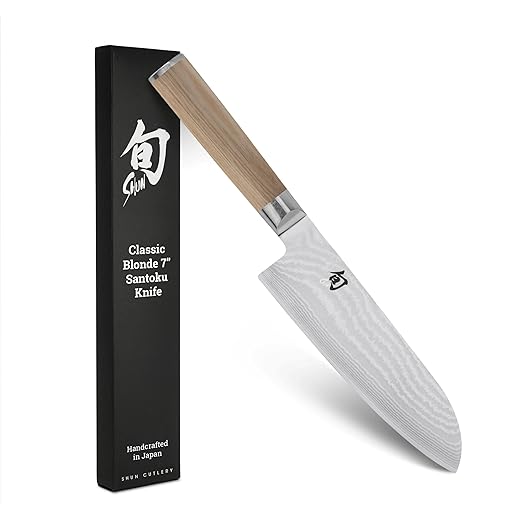
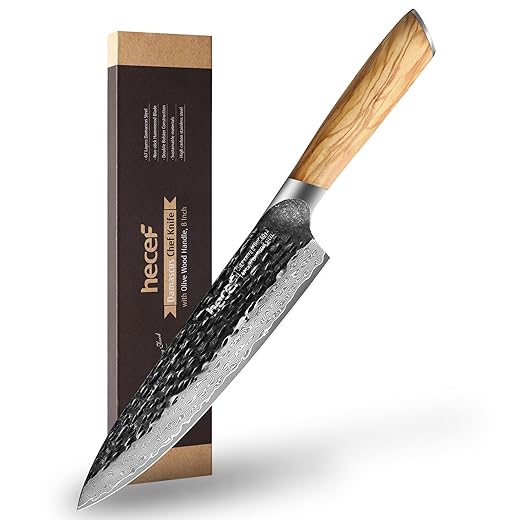
KAI Shun Classic White vs. Hecef Professional Chef Knife
|
Best edge retention
KAI Shun Classic White Santoku 18 cm
|
VS |
Best value Damascus
Hecef Professional Chef Knife
|
|---|---|---|
|
4.5
|
Our rating |
4.2
|
|
32
|
Damascus layers |
67
|
|
VG-MAX
|
Core steel |
High-carbon stainless
|
|
61 (±1)
|
Hardness (HRC) |
58–60
|
|
Pakkawood
|
Handle material |
Olive wood
|
|
Santoku
|
Blade style |
Chef knife
|
|
Japan
|
Made in |
Not specified
|
|
No
|
Dishwasher safe |
No
|
|
–
|
Price |
–
|
| BUY NOW | BUY NOW |