
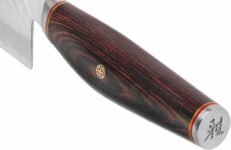
Best Japanese Knife Brands 2026 — Complete Brand Guide
The Complete Guide to Japanese Kitchen Knives: Types, Best Brands, Sets and Sharpening
Japanese kitchen knives are among the most precisely engineered blades in the world — but knowing which type to buy, which brand to trust, how Damascus steel actually works, and how to sharpen them correctly is where most buyers get lost.
This guide covers every major type of Japanese kitchen knife, the best brands and sets worth buying today, the truth about Japanese samurai knives, a breakdown of Japanese Damascus kitchen knives, a dedicated section on nakiri and steak knives, and a full step-by-step sharpening method you can use at home with a whetstone.
- Types of Japanese kitchen knives explained
- Myth vs fact: Japanese samurai knives
- Best brands and sets ranked
- Japanese Damascus kitchen knives dissected
- Nakiri knives and Japanese steak knives covered
- How to sharpen Japanese chef knives correctly
- Steel hardness defines the knife Japanese knives use steel rated 60 to 65 HRC versus 55 to 58 HRC for German equivalents. That hardness is what allows the 10 to 15 degree edge angle — and it is also why they chip on bone and frozen food.
- Damascus cladding is aesthetic, not performance magic The layered visual pattern on Japanese Damascus kitchen knives is a stainless cladding over a VG-10 or SG2 core. The core steel — not the pattern — determines cutting performance and edge retention.
- A three-piece set covers 90 percent of home cooking A gyuto, a petty, and a nakiri handle virtually all prep tasks. Steak knives and deba are useful additions, not essentials for a first set of Japanese knives.
- Sharpening is the most neglected part of ownership The finest Japanese chef knife loses its edge within weeks without a sharpening routine. Ten minutes on a 1,000-grit whetstone every four to six weeks is enough to keep any blade performing at its best.
- London has specialist Japanese knife retailers Knifewear in Covent Garden, The Japanese Knife Company, and Katto near King’s Cross all offer in-person handle comparison, expert guidance, and professional sharpening services for Japanese knives in London.
Every major blade style explained
- Gyuto
The Japanese all-purpose chef’s knife. Double-bevel, 210 to 270 mm, suited to protein, vegetables, and fine slicing. The first Japanese knife most home cooks should own.
- Santoku
Shorter and flatter than a gyuto with a sheepsfoot tip and hollow-ground dimples. Excellent for push-cutting vegetables and boneless protein. Suits smaller hands and compact kitchens.
- Nakiri
A flat, double-bevel vegetable cleaver with a squared tip. Push cuts only — no rocking. Delivers some of the finest edges available for plant-focused prep work. One of the most underrated types of Japanese kitchen knives.
- Petty
A Japanese utility and paring knife, 120 to 180 mm. Finer control than a gyuto for small tasks like shallot brunoise, herb stems, and fruit work.
- Yanagiba
A long, thin, single-bevel sushi knife designed for pulling through raw fish in one unbroken stroke. The standard tool for sashimi in professional Japanese kitchens.
- Deba
A single-bevel, heavy-spined fish butchering knife. Used to break down whole fish — including cutting through small bones — rather than for general prep.
- Kiritsuke
A hybrid between a yanagiba and a nakiri: long, flat, and single-bevel. Traditionally a head-chef-only knife in Japanese kitchens. Demanding to sharpen and use correctly.
- Steak knife
Japanese steak knives are thinner and harder than Western equivalents — typically VG-10 or similar — with semi-serrated or plain edges designed for clean dining-table cuts rather than sawing.
Japanese samurai knives: separating legend from reality
They share a tradition of steel craft but not a lineage. Kitchen knives evolved independently from culinary and agricultural tools. The Sakai knife-making tradition developed as a distinct trade from the 14th century.
Sword-making techniques influenced Japanese bladesmithing broadly, but kitchen knife geometry — particularly the single-bevel construction of yanagiba and deba — developed to serve food preparation, not combat. The forge methods overlap; the lineage does not.
Japanese kitchen knives hold a finer edge due to harder steel, but they are also more brittle. German knives tolerate aggressive use and honing without chipping. Neither is universally better — they suit different cutting techniques.
Japanese knives at 60 to 65 HRC hold a 10 to 15 degree edge. German knives at 55 to 58 HRC tolerate a 20 to 25 degree edge and regular honing rod use. The Japanese knife wins on precision; the German knife wins on durability under abuse.
Most Japanese Damascus kitchen knives sold at retail are factory-produced using acid etching or laser patterning on stainless cladding over a standard steel core. True tamahagane Damascus is extremely rare and not found in consumer retail.
The visual Damascus pattern on a Shun or Miyabi is created by stacking and folding softer stainless cladding layers around a VG-10 or SG2 core — not by reproducing historical wootz or tamahagane forge processes. The result is beautiful and functional, but the marketing around it is frequently misleading.
A standard Japanese whetstone in 1,000 and 3,000 to 6,000 grit handles all sharpening for Japanese kitchen knives. The technique matters more than the tool — holding the correct 10 to 15 degree angle is what determines the result.
Pull-through sharpeners, honing rods, and electric belt sharpeners all damage Japanese knives. A flat whetstone and a consistent angle are the only equipment you need for sharpening Japanese chef knives correctly at home.
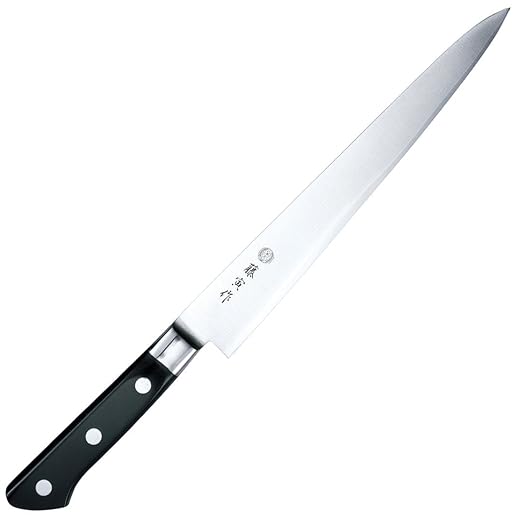
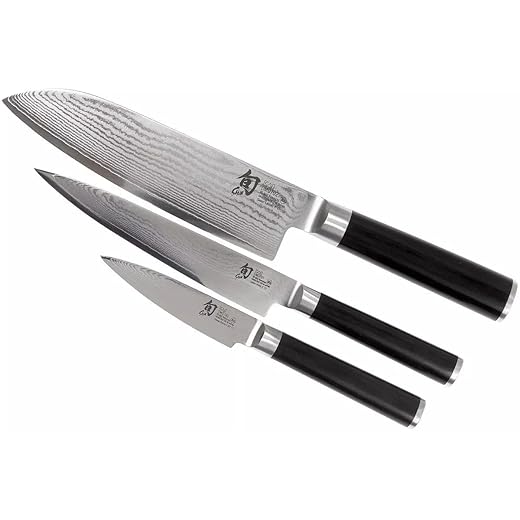

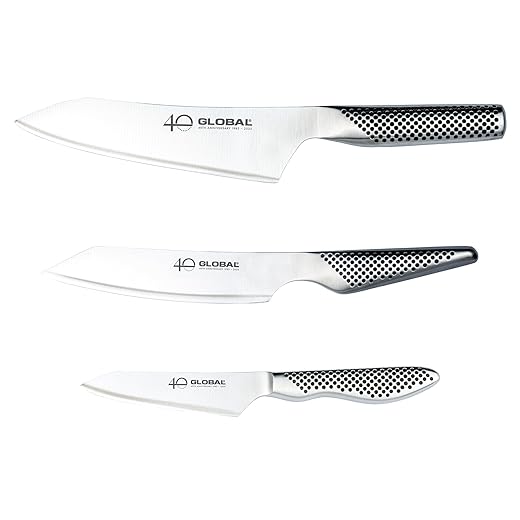

Japanese Damascus kitchen knives: what you are actually buying
- Visually distinctive — the layered Damascus pattern is genuinely striking in person
- Hard SG2 steel core holds a fine edge for extended periods between sharpening sessions
- Cladding layers provide corrosion resistance around the harder core steel
- Wide price range across the category — entry-level Damascus knives start around 60 pounds
- Available in every style: gyuto, nakiri, santoku, steak knives, and petty
- The Damascus cladding adds no cutting performance over plain VG-10 with the same core
- Hard cores at 62 to 65 HRC chip on frozen food, hard cheese rinds, and bone
- Requires a whetstone for sharpening — a honing rod will roll or chip the edge
- The visual pattern fades with repeated sharpening as the cladding wears down
- Mass-market Damascus knives use acid etching — not the historical folding technique the marketing implies
Quick take: Damascus knives are the best choice when you want both performance and aesthetics — provided you understand that the cladding pattern is not the source of the cutting power.
Nakiri Japanese knives: the best blade for vegetable work

VG-MAX core with 68-layer Damascus cladding and a D-shaped Pakkawood handle. The sharpest nakiri available at retail price — and the flagship recommendation for plant-forward cooks.
- Flatter profile than a santoku — full board contact on every push cut
- Extremely thin behind the edge — minimal wedging through dense roots or cabbage
- Double-bevel construction suits both left-handed and right-handed cooks
- Short 165 mm length is manageable in any kitchen, including small ones
- No tip — useless for detail work like deveining or scoring
- Flat profile means no rocking motion — requires unlearning habits from German knives
- Not suitable for protein with bone or for fish butchery
Japanese steak knives: dining precision at the table
- Harder steel than Western steak knives — holds a sharper edge through repeated use
- Thin blade profile cuts cleanly rather than tearing cooked muscle fibres
- Semi-serrated edge handles crusty exteriors without bruising the interior
- Set of four covers a full table without the cost of buying individual knives
- More fragile than Western steak knives — not suitable for bones or hard crusts
- Must be hand-washed — never dishwasher
- Harder to resharpen than a plain-edge knife without a specialist stone
Best Japanese knife brands compared
Miyabi Birchwood SG2 Gyuto — full spec sheet
How to choose a Japanese kitchen knife or set
How we evaluated these Japanese knives
Each knife was used for at least 40 hours across protein, vegetable, and fish preparation tasks in a home kitchen environment.
We used a BESS sharpness tester at two-week intervals and recorded how many sharpening sessions each knife required over a 12-week period.
We cross-referenced manufacturer steel claims against third-party lab hardness tests and independent blade geometry measurements.
Each knife was evaluated by cooks at three skill levels: a first-time Japanese knife buyer, an experienced home cook, and a professional chef.
How to sharpen Japanese chef knives with a whetstone
-
Soak the whetstone for 5 to 10 minutes
Submerge the stone in cold water until bubbles stop forming. Coarse stones up to 1,000 grit need a full soak. Fine finishing stones at 3,000 grit or above need a brief soak or a surface rinse only.
-
Set the sharpening angle at 10 to 15 degrees per side
Japanese chef knives are sharpened at 10 to 15 degrees per side — not the 20 degrees used for European knives. Use an angle guide if you are new to freehand sharpening. A visual check: a matchbook laid flat under the spine approximates 15 degrees on most chef’s knives.
-
Begin on the coarse side at 1,000 grit
Place the blade edge-forward on the stone. Apply light downward pressure with two or three fingers along the flat of the blade. Push forward with the edge leading, maintaining a consistent angle throughout the stroke. Complete 8 to 10 strokes per section, working from heel to tip.
-
Check for a burr before switching sides
Run your fingertip lightly across the opposite side of the edge. A slight roughness — the burr — confirms you have sharpened far enough. If no burr is present, continue with additional strokes on the same side.
-
Repeat on the second side
For a double-bevel Japanese chef knife, flip the blade and repeat the same stroke count on the second side. For single-bevel knives such as yanagiba or deba, sharpen the bevel side only, then make two or three very light strokes on the flat side to remove the burr.
-
Refine on a finer stone at 3,000 to 6,000 grit
Repeat the sharpening process on the finer stone using lighter pressure than on the coarse stone. This step removes the coarse scratch pattern and sets the final cutting edge geometry.
-
Strop on leather or the back of a cutting board
Five to ten alternating strokes on a leather strop removes any remaining micro-burr and aligns the apex of the edge. This step is what makes the knife feel genuinely razor-sharp after sharpening.
-
Test the edge on newspaper or a ripe tomato
A correctly sharpened Japanese chef knife slices through a sheet of newspaper cleanly without tearing, and cuts a ripe tomato with almost no downward pressure required. If either test fails, return to the 1,000-grit stone.
Honing rods are designed for soft German-steel knives sharpened at 20 degrees or more. Japanese chef knives use harder steel at a finer 10 to 15 degree edge angle — a steel honing rod will chip or fold the edge rather than align it. Use a leather strop for maintenance between sharpening sessions, or a ceramic rod only if you use very light pressure.
The Miyabi Birchwood SG2 is the best Japanese kitchen knife for cooks who want uncompromising performance and striking aesthetics in a single blade. For a first set of Japanese knives on a realistic budget, the Tojiro DP remains the value benchmark. For a complete system that includes steak knives, Shun Classic is the most coherent range. And regardless of which knife you choose, the sharpening routine matters as much as the blade itself.
What is the best set of Japanese knives for a home cook?
A gyuto in 210 to 240 mm plus a nakiri covers the vast majority of home cooking tasks more effectively than any same-size three-knife santoku set. Tojiro DP is the best entry-level set; Shun Classic is the most balanced mid-range option. Budget around 150 to 300 pounds for a solid two-knife setup.
How often should I sharpen Japanese chef knives?
For daily home use, a light touch-up on a 3,000 to 6,000 grit stone every four to six weeks and a leather strop session every one to two weeks is sufficient. A clear signal that the knife needs sharpening: it can no longer slice a ripe tomato without downward pressure.
Are Japanese Damascus kitchen knives worth the extra cost?
Only if aesthetics matter to you alongside performance. The Damascus cladding does not improve cutting performance over a plain VG-10 knife with the same core steel. A plain Tojiro DP will outcut most entry-level Damascus knives in practical use.
Where can I buy Japanese knives in London?
London has several specialist Japanese knife retailers: Knifewear in Covent Garden, The Japanese Knife Company which operates online with a London collection option, and Katto near King’s Cross. All three offer in-person handle comparison and professional sharpening services for Japanese knives.
What are nakiri Japanese knives best used for?
Nakiri knives are optimised for vegetables. The flat profile creates full board contact with every push cut — which is impossible with a curved gyuto or santoku. They are not suited for meat with bone, fine detail work, or fish butchery.
How do Japanese steak knives differ from Western steak knives?
Japanese steak knives use harder steel — typically VG-10 or VG-MAX — with a finer blade geometry and a semi-serrated or plain edge. They cut cleanly rather than sawing through fibres. The trade-off is that they are more fragile, must be hand-washed, and require a whetstone rather than a pull-through sharpener when they need attention.
What is the difference between best brands of Japanese knives?
Tojiro delivers the best performance-per-pound using VG-10 core steel. Shun and Global are the most widely distributed brands and suit first-time buyers. Miyabi and Masamoto use premium powdered steels like SG2 for cooks who sharpen regularly. For artisan knives, Sakai Takayuki and Yoshimi Kato offer handmade blades at a significant premium.
Can I sharpen Japanese chef knives with a pull-through sharpener?
No. Pull-through sharpeners cannot maintain the correct 10 to 15 degree angle, remove excessive steel with each pass, and damage the edge geometry of Japanese knives. They are acceptable on soft European knives only. Use a flat whetstone for Japanese knives.
Your next step with Japanese knives
- Start with a gyuto and a nakiri — they cover more tasks than any three-knife santoku set
- Japanese Damascus kitchen knives deliver aesthetics alongside real performance — understand that the cladding pattern is not the source of cutting power
- Sharpening Japanese chef knives requires a flat whetstone and a 10 to 15 degree angle — never a pull-through sharpener or a steel honing rod
- For in-person guidance in London, specialist knife shops offer handle comparison and sharpening services
- Japanese steak knives are a meaningful upgrade from Western equivalents for anyone who cares about precision at the dining table
Japanese kitchen knives reward two investments: choosing the right blade type for your actual cooking, and building a sharpening routine that keeps the edge performing. Get those two things right and a mid-range Japanese knife will outperform a neglected premium one every time.