SHAN ZU 20cm Santoku Knife Review — Ultra-Sharp 12° Powder Steel, 63 HRC
SHAN ZU 20cm Japanese Santoku Kitchen Knife
Introduction
The SHAN ZU 20cm Santoku is a Japanese-style kitchen knife targeted at home cooks and enthusiasts who want a high-performance, affordable chef’s knife. Manufactured by SHAN ZU and sold as a 20cm Santoku (all-purpose Japanese chef knife), it promises a very hard powder-steel blade, a narrow 12° edge, and an ergonomic wooden handle. This review examines the knife’s materials, design, real-world performance, and care considerations to help potential buyers decide whether it fits their needs.
Brief Overview
– Manufacturer: SHAN ZU
– Product category: Japanese Santoku kitchen/chef knife (20 cm blade)
– Intended use: General kitchen tasks — slicing, dicing, mincing vegetables, fish and boneless meats; suitable as an all-purpose everyday chef’s knife for home cooks and pros who prefer a Santoku profile.
Appearance, Materials and Design
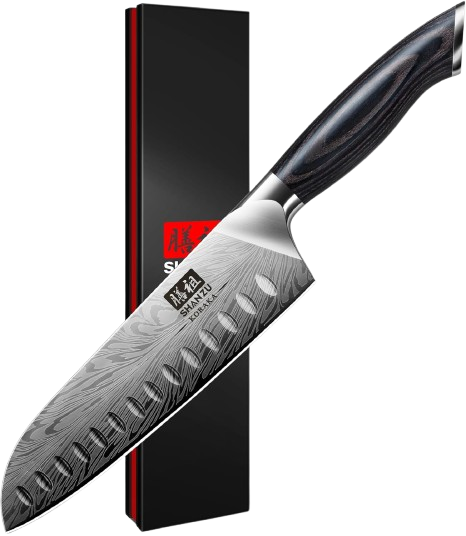
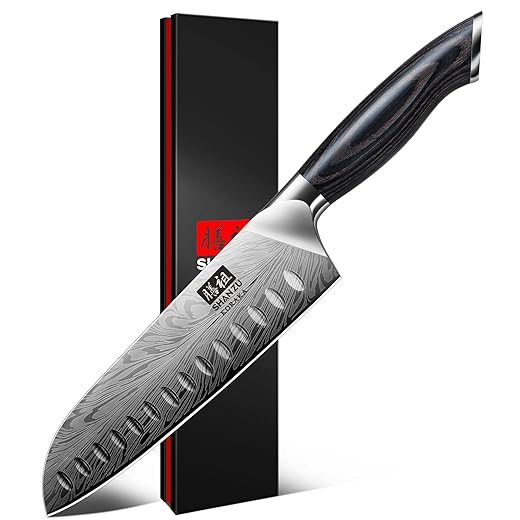
Out of the box the SHAN ZU Santoku presents a modern-traditional aesthetic: a grey powder-steel blade with a laser-engraved surface texture and a warm wood handle. The blade is relatively slim (manufacturing notes list a 2.2 mm spine thickness before beveling) and finished with a hollow (granton-style) edge profile to reduce sticking. The finished edge is ground to a narrow 12° per side, giving a keen, razor-like geometry.
Materials and construction claimed by the manufacturer include high-carbon Japanese powder steel hardened to around 63 HRC and a forged construction. The handle is described in the product text as Pakkawood (a stabilized hardwood/plastic composite commonly used for knives) but specification fields list “Oak” and “Handle Material: Oak” — that inconsistency should be noted. The knife ships in a gift box and includes a 30-day return policy plus a lifetime warranty according to the product listing.
Key Features & Specifications
- Blade length: 20 centimetres (approx. 8 inches)
- Blade material: High-carbon Japanese powder steel (manufacturer claims)
- Hardness: ~63 HRC (manufacturer claim)
- Edge geometry: 12° cutting angle on each side (very narrow)
- Blade thickness: ~2.2 mm backbone before grinding (manufacturer data)
- Blade finish: Laser engraved pattern (cosmetic), grey blade colour
- Edge type: Hollow/granton edge to reduce food adhesion
- Handle: Ergonomic wood (listed as Oak in spec; product text references Pakkawood)
- Construction: Forged (claimed)
- Weight: ~0.25 kg
- Dishwasher safe: listed as “Yes” in specs (see care notes below)
- Included components: Knife (gift box packaging)
- Origin: China
- Price (as listed): 25.86 GBP
- Warranty/returns: 30-day return, lifetime warranty (manufacturer)
Real-World Use & Performance
Sharpness & Initial Edge
The out-of-the-box sharpness is one of this knife’s strongest selling points. The combination of a narrow 12° edge and very hard powder steel (63 HRC claimed) produces an edge that cuts with very little effort. Users consistently report excellent initial slicing performance on vegetables, fruit, fish and boneless meat. If you prefer a very keen edge, this Santoku delivers immediate confidence.
Edge Retention & Sharpening
The claimed 63 HRC and powder steel composition suggest strong edge retention — reviewers note the blade stays sharp for a long time. The trade-off with very hard steels: they can be more difficult to re-sharpen with everyday stones and abrasives. Several experienced users recommend diamond or CBN abrasives for reprofiling or restoring an extremely hard edge. For routine maintenance, a good leather strop and fine whetstone/hone will keep it performing, but expect sharpening to be technically harder than with softer steels.
Cutting Performance in Common Scenarios
- Vegetables and fruit: Excellent. Thin, precise slices and easy dicing. The hollowed sections/granton help reduce sticking of wet or starchy items.
- Fish and fillets: Very good for filleting, portioning and delicate slicing — the narrow edge and thin profile excel here.
- Boneless meat: Very good for slicing roast or trimmed cuts; it handles meat effortlessly.
- Bone & heavy-duty tasks: Not ideal for regular bone work. Although a few users reported cutting through a whole chicken or bones, this is not recommended long-term: the hard, thin edge is more prone to chipping if used on bone, frozen items or prying tasks.
- General prep for long sessions: The knife is relatively light (~250 g) and well balanced for extended chopping/vegetable prep; ergonomic handle reduces hand fatigue.
Handle Comfort & Balance
The ergonomic wooden handle fits the hand comfortably and users report good control and a secure grip. Balance is blade-forward but not heavy; the knife feels nimble for typical Santoku tasks. Note again that the exact handle material is inconsistently reported — product text claims Pakkawood (stable/resistant), while specs list oak.
Durability & Corrosion Resistance
Powder steels and higher-carbon steels can deliver excellent edge retention and toughness, but they often require more care to avoid rust and discoloration. Multiple user reports indicate excellent edge life, but some users observed rust spots if the blade was left wet. Although the specification lists the knife as dishwasher safe, hand washing and thorough drying are strongly recommended to preserve the finish and prevent spotting or corrosion over time.
Notable Design Details & Caveats
- Laser-engraved pattern on the blade adds a modern decorated look, but this is cosmetic — the product is explicitly not Damascus steel despite some third-party claims.
- The hollow/granton edge reduces adhesion and cutting resistance, which improves performance with wet foods and sticky items like potatoes.
- The very hard blade (63 HRC claimed) provides great edge retention but makes re-sharpening more demanding; normal household stones will work for honing, but harder abrasives may be needed for reprofiling.
- Dishwasher-safe claim is present in specs, but practical user evidence and best practice strongly advise against the dishwasher.
- Construction is described as forged — many knives at this price point are either stamped or partially forged; SHAN ZU claims forged construction, but buyers seeking traditional high-end forging may want to inspect build quality in person.
Pros and Cons
Pros
- Outstanding out-of-the-box sharpness (12° per side) — excellent for precise slicing.
- High hardness (claimed 63 HRC) for excellent edge retention.
- Hollow/granton edge helps reduce sticking and cutting resistance.
- Ergonomic wooden handle that many users find comfortable and well balanced.
- Attractive laser-engraved blade pattern and gift-box presentation.
- Very affordable price for the performance level claimed.
- Lifetime warranty and 30-day returns add buyer protection.
Cons
- Steel hardness makes sharpening more difficult; may require diamond/CBN abrasives for reprofiling.
- Potential for rust or discoloration if left wet — handle with care despite “dishwasher safe” spec.
- Inconsistent specification for handle material (Pakkawood vs Oak) — buyers who care about exact materials should confirm.
- Not intended for heavy bone work; the thin, hard edge can chip if misused.
- Claims such as “forged” and “powder steel” are plausible but not independently certified in the listing — shoppers seeking audited metallurgical proof may want lab-verified data.
Care Recommendations
- Hand wash with mild detergent immediately after use and dry thoroughly to avoid spotting or corrosion.
- Use a fine whetstone or strop to maintain the keen 12° edge. For major sharpening or reprofiling, consider diamond/CBN stones or professional sharpening services due to the steel’s high hardness.
- Avoid cutting bones, frozen foods, or prying tasks to reduce risk of chipping.
- Store in a knife block, magnetic strip, or sheath to protect the edge and the handle finish.
Conclusion
The SHAN ZU 20cm Santoku offers exceptional value for buyers seeking a very sharp, long-lasting kitchen knife on a modest budget. Its narrow 12° edge and claimed 63 HRC powder steel provide immediate cutting performance and strong edge retention, making it excellent for vegetables, fish, and boneless meats. The ergonomic wooden handle and hollow edge profile add comfort and practical benefits during food prep.
Downsides to consider: the very hard steel demands more careful sharpening and can be susceptible to rust if left wet, so hand-washing and regular maintenance are important. There are also minor specification inconsistencies (handle material) and the product should not be treated as a heavy-duty bone-cleaving tool.
Overall impression: for home cooks and enthusiasts who want a razor-sharp Santoku that performs like a higher-end blade at a budget price, this SHAN ZU knife is an impressive option — provided you commit to proper care and sensible use. It’s a strong buy for those who prioritize cutting performance and edge retention and are comfortable maintaining a harder steel.
Price listed: 25.86 GBP. Manufacturer: SHAN ZU. Country of origin: China. Warranty & returns: 30 days return, lifetime warranty (per listing).
FOGAMA Verdict
The SHAN ZU 20cm Japanese Santoku delivers sharp, versatile performance at a budget-friendly price; its thin 20cm blade excels at slicing, dicing and mincing with good balance and a comfortable handle. Edge retention and fit-and-finish are modest compared with premium blades, but it’s a reliable everyday kitchen workhorse for home cooks.
Best for: budget-conscious home cooks seeking a versatile daily knife.
Avoid if: you’re a professional chef or demand premium steel and long-lasting edge retention.
Is it worth the money?
The SHAN ZU 20cm Japanese Santoku Kitchen Knife offers strong value if you want a versatile, all-purpose chef’s knife with good balance and a thin, precise blade. For home cooks who care about sharpness, control, and a lightweight feel, it’s generally considered worth the price—compare build quality, warranty, and user reviews against alternatives before buying.
How sharp is it?
Out of the box the SHAN ZU 20cm Santoku is typically very sharp and suitable for slicing vegetables, boneless meats, and herbs with clean, precise cuts. Edge retention varies with use and steel type, so regular honing will keep the blade performing like new.
What steel does it use?
Specific steel can vary by production run—many SHAN ZU knives use high-carbon stainless steels designed for a balance of sharpness and corrosion resistance. Always check the product listing or packaging for the exact steel grade for the SHAN ZU 20cm Japanese Santoku Kitchen Knife to confirm composition and maintenance needs.
Can beginners use it?
Yes. The 20cm Santoku profile is beginner-friendly thanks to its balanced weight, short heel-to-tip length, and flat cutting geometry, which make chopping and push-cutting easier to learn. Beginners should practice safe knife handling and keep the blade honed for best results.
How often should it be sharpened?
Hone the SHAN ZU 20cm Santoku with a steel or ceramic rod before or after each use to realign the edge; sharpen with a whetstone or professional service when cuts become dull (commonly every 6–12 months for regular home use). Frequency depends on how often you use it and what you cut—softer daily use needs less frequent sharpening than heavy-duty tasks.