
SHAN ZU Damascus Chef Knife Review 2026 — The Full Honest Assessment
SHAN ZU Damascus Chef Knife Review 2026
67 Layers · 10Cr15MoV at ~60 HRC · G10 Handle — the complete honest assessment
Updated April 2026 · 15 min read · FOGAMA Product Review
Affiliate disclosure: FOGAMA may earn a small commission from qualifying purchases via links on this page — at no extra cost to you. Prices shown are sourced live from Amazon UK. Full details.
FOGAMA Verdict — SHAN ZU Damascus 8-Inch
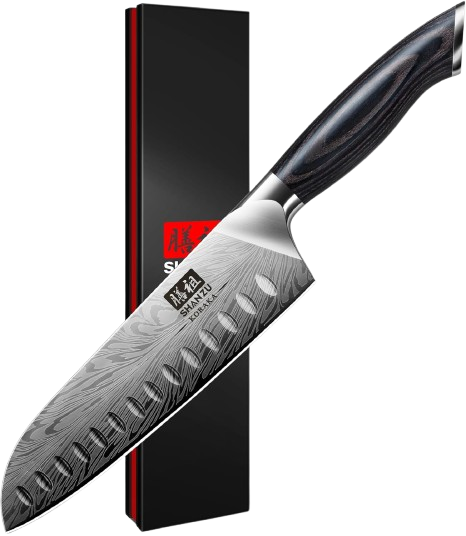
The best value Damascus chef knife in the UK. 10Cr15MoV at ~60 HRC — genuine Japanese-spec hardness — with 67-layer forge-welded Damascus construction and a G10 handle. Cutting performance significantly exceeds the £80–100 price point. Not a Shun or Wüsthof in fit, finish, or heritage, but an outstanding knife for what it costs.
FOGAMA Score: 8.2 / 10 — ✅ Recommended
Quick Verdict & Full Specs
| Steel | 10Cr15MoV (high-carbon stainless) |
| HRC Hardness | ~60 HRC |
| Damascus | 67 layers (forge-welded) |
| Edge Angle | 15° per side (30° total) |
| Blade Length | 8 inch / 20cm |
| Spine Thickness | ~2.2mm |
| Weight | ~200g / 7.1oz |
| Handle | G10 Fibreglass (octagonal) |
| Country | China |
| Price Range | ~£80–100 |
| FOGAMA Score | 8.2 / 10 |
✅ Pros
- Genuine 10Cr15MoV at ~60 HRC — real Japanese-spec hardness
- 67-layer forge-welded Damascus (not surface-etched)
- Sharp 15° factory edge from the box
- G10 handle — moisture-resistant, ergonomic, durable
- Outstanding price-to-performance ratio
❌ Cons
- Fit and finish below Shun or Wüsthof
- Some batch-to-batch QC variation
- Avoid hard bones — can chip at 60 HRC
- Hand wash only — never dishwasher
Who Is This Knife For?
Home cooks who want Japanese-spec cutting performance and Damascus aesthetics without committing to the £130+ price that Shun requires. If you are currently using a supermarket knife or basic budget blade and want to understand what 60 HRC genuinely feels like in daily cooking, the SHAN ZU delivers that experience at an accessible price.
It is also the right second knife for cooks who already own a German blade and want to experience 15° Japanese cutting geometry without risking £140 on a Shun. The practical difference between 60 HRC and 58 HRC is real but modest; the difference between 20° and 15° edge geometry is more noticeable in daily use than most people expect.
Who should not buy this knife: Cooks who want zero-maintenance reliability and do not want to use a ceramic honing rod and whetstone. Cooks who regularly work with bones or frozen food. Cooks who want the prestige and finish quality of Shun or Wüsthof. Those cooks should buy a Wüsthof Classic and stop looking.
Steel Analysis: 10Cr15MoV at ~60 HRC
SHAN ZU’s marketing describes this as a “67-layer high-carbon steel knife” — accurate but incomplete. The 67 layers are the Damascus cladding. The core steel forming the cutting edge is 10Cr15MoV: a Chinese-produced high-carbon stainless containing approximately 1% carbon, 15% chromium, with molybdenum and vanadium additions. It reaches approximately 60 HRC.
| Specification | SHAN ZU | Victorinox | Wüsthof Classic | Shun Classic |
|---|---|---|---|---|
| Steel | 10Cr15MoV | X55CrMo14 | X50CrMoV15 | VG-MAX |
| HRC | ~60 | 56 | 58 | 60–61 |
| Edge retention | Very good | Moderate | Good | Excellent |
| Sharpen method | Ceramic + whetstone | Any rod | Rod or whetstone | Ceramic + whetstone |
| Price (8-inch) | ~£80–100 | ~£35–45 | ~£120–140 | ~£130–150 |
Handle & Ergonomics
The G10 fibreglass handle is the right choice for a knife at this price. Unlike Pakkawood or natural wood, G10 does not absorb water, does not expand or contract with temperature, and does not degrade with daily kitchen washing. The octagonal cross-section echoes traditional Japanese handle geometry and sits naturally in both pinch grip and full handle grip without fatigue during extended prep sessions. At ~200g, it sits between the Shun (184g) and Wüsthof Classic (255g) — lighter than German knives, slightly heavier than the Shun.
Real Kitchen Performance
Vegetables
The 15° edge and 2.2mm spine move through dense root vegetables with noticeably less resistance than a 3mm German knife. Thin tomato slices stay intact — the 60 HRC edge breaks the skin with zero pressure. Basil chiffonade stays green through the entire cut; the Damascus micro-serrations reduce the bruising that occurs with a less acute blade on soft herbs.
Proteins
Boneless chicken breast, fish fillets, and thin beef slices are handled cleanly. The 15° bevel produces clean cuts through muscle fibres. Do not use this on bones — at 60 HRC, the harder steel will chip on hard impact in a way that German steel at 58 HRC would not. Keep a German knife or cleaver for bone work.
Extended Sessions
The combination of lighter weight, balanced profile, and secure G10 handle makes this knife comfortable over a full meal prep session. Cooks who regularly prep for 30–45 minutes will notice reduced fatigue compared to heavier German knives.
Edge Retention & Maintenance
At 60 HRC, the SHAN ZU holds its factory edge longer than a Victorinox (56 HRC) or Wüsthof (58 HRC) under comparable home use. For a cook using the knife 4–5 times per week: sharpen every 4–6 months on a 1000/2000 whetstone. Use a ceramic honing rod weekly for daily maintenance — never a traditional grooved steel rod, which will micro-chip the harder edge. Full technique: How to Sharpen a Kitchen Knife.
Value Assessment — vs Tojiro and Shun
At £80–100, the SHAN ZU’s direct competitors are the Tojiro DP Gyuto (~£80, VG-10 at 60 HRC) and the entry-level Shun range (~£130–150). Against the Tojiro: similar hardness, comparable cutting performance, Damascus aesthetics versus plain construction — essentially matching performance at a similar price with a visual premium for Damascus. Against the Shun: the SHAN ZU is £50 cheaper, comparable hardness, but noticeably lower fit and finish. The Shun is a better knife — whether it is £50 better depends on how much finish quality matters to you.
Live Price & Buy Options
Add this product in Content Egg → then this block auto-renders with live Amazon UK prices.
| Version | ASIN | Description |
|---|---|---|
| SHAN ZU Damascus 8″ (67-layer) | B0DBTT4W2Q | Main recommendation — 67-layer Damascus, 10Cr15MoV core |
| SHAN ZU Classic 8″ | B071JV1GDP | Non-Damascus version at lower price |
| SHAN ZU Kitchen Set | B072MMH2QS | Multi-piece set option |
Frequently Asked Questions
Is the SHAN ZU Damascus knife actually good quality?
Yes — genuinely excellent for the price. 10Cr15MoV at ~60 HRC is real high-carbon stainless with better edge retention than German steel at similar prices. The Damascus is forge-welded, not surface-etched. Cutting performance significantly exceeds the £80–100 price point.
How does SHAN ZU compare to Shun?
Both reach ~60 HRC (SHAN ZU: 10Cr15MoV, Shun: VG-MAX). Shun has better steel composition, significantly better fit and finish, and professional credibility. SHAN ZU costs £50–60 less. For home cooking performance per pound: SHAN ZU is excellent value. For gift-giving or professional use: Shun’s premium is justified.
What sharpener should I use for the SHAN ZU?
A whetstone (1000/2000 grit combination stone). Never a pull-through sharpener — it damages the Damascus pattern and removes too much material. For daily maintenance: ceramic honing rod only, never a grooved steel rod. Full guide: How to Sharpen a Kitchen Knife.
Can the SHAN ZU go in the dishwasher?
No. Dishwasher heat, detergent, and vibration damage the edge and handle over time. Handwash with warm water and mild soap, dry immediately. This applies to every quality kitchen knife, not specifically to SHAN ZU.
Is 10Cr15MoV as good as VG-10?
VG-10 has a slight composition advantage in edge retention at the same hardness. In practical home cooking, the difference is small. Both reach ~60 HRC and both maintain a 15° edge well through months of regular use. The Tojiro DP (VG-10, ~£80) and SHAN ZU Damascus (10Cr15MoV, ~£85) perform comparably in real kitchen conditions.
Conclusion
The SHAN ZU Damascus 8-inch is the best value Damascus chef knife in the UK market. It delivers genuine Japanese-spec steel performance (10Cr15MoV, ~60 HRC) and real 67-layer forge-welded Damascus construction at a price that makes it accessible to cooks stepping up from budget knives. The cutting performance significantly exceeds the £80–100 price point. Buy it if you want your first real Japanese-spec knife, a first Damascus knife, or a precision second knife alongside a German blade. Maintain it properly and it will serve you well for years.
Related reading: Best Damascus Kitchen Knives · Best Japanese Knives 2026 · Best Budget Knives Under £100 · How to Sharpen a Knife